Ce séminaire technique est offert sous forme de webinaire et de formation en personne. Veuillez consulter Inscription à la formation pour obtenir les dates et plus d'informations.
Objectif du cours
Le séminaire technique avancé offre aux participants la chance unique d'acquérir des connaissances techniques pratiques et à jour quant à l'étude et à la conception de systèmes de mise à la terre et d'atténuation de la foudre efficaces et rentables, offertes par les plus grands spécialistes et chercheurs du monde.
Selon que vous souhaitiez protéger un système électrique, une centrale électrique ou un dispositif à proximité subissant des interférences électromagnétiques provenant de défauts de systèmes électriques ou de surtensions causées par la foudre ou par la commutation, ce cours présentera des principes pertinents quant à différents dispositifs et installations industrielles et publiques lors de conditions de régime permanent, de défaut et transitoires, et ce, à l'aide de modèles réalistes de l'environnement.
L'accent sera davantage mis sur la démonstration de concepts scientifiques à l'aide d'exemples pratiques puisés à partir de plusieurs projets de recherche et études techniques effectués par les chercheurs de SES depuis 1978. Des calculs analytiques pertinents sont inclus dans un guide de référence exhaustif offert à tous les participants du cours. Un des objectifs principaux de ce cours est d'expliquer et de discréditer plusieurs fausses idées, ambiguïtés et techniques erronées de mesure, d'analyse et de conception qu'on retrouve toujours en grand nombre dans l'industrie et qui sont encore enseignées dans certains cours.
Plan et horaire du cours
Lors de la
Semaine 1, les trois modes d'alimentation électromagnétique sont présentés. Les techniques de mesure et d'interprétation de la résistivité terrestre dans des sols homogènes et multicouches (sols ayant au moins deux couches horizontales et verticales) seront abordées. Les concepts d'équivalence du modèle de sol et de résolution de la couche de sol seront expliqués avec des simulations informatiques. L'analyse et la conception de systèmes de mise à la terre simples et complexes composés de conducteurs tridimensionnels à orientation arbitraire enterrés dans des sols multicouches seront abordés et illustrés avec des exemples pratiques. Nous analyserons également le cas d'un système de mise à la terre enterré en partie dans un volume fini (p. ex. : remblayage) de sol hétérogène. Le concept scientifique des mesures d'impédance de terre prises à l'aide de la méthode de la chute de potentiel sera clairement expliqué à l'aide de plusieurs modèles de sols réalistes. Nous analyserons également les paramètres de lignes de transport, de câbles enterrés et de pipelines enterrés (impédances propre et mutuelle) dans des sols à couches et nous présenterons des techniques de calcul de la distribution du courant de défaut. Nous présenterons aussi des concepts de sécurité en matière d'électricité et des questions à propos des courants qui circulent dans le corps, des impédances du corps et des résistances du pied dans les cas d'exposition à de la fréquence industrielle et à des fréquences élevées.
Lors de la Semaine 2, l'accent est mis sur l’utilisation des puissants processeurs d'entrée et de sortie de SES, tels que SESCAD, ROWCAD et SESShield-3D. Il y a également une présentation et une analyse détaillée des effets d'interférences inductives et conductrices causées par des conducteurs alimentés sur des structures et des conducteurs métalliques aériens ou enterrés, dénudés ou revêtus, tels que des pipelines, des clôtures et des fils de communication. On y aborde également les méthodes et les équipements d'atténuation ainsi que leurs mérites relatifs. Les interactions entres les sources des interférences et les lignes ou circuits exposés sont analysées en détail. Finalement, on y présente les champs électriques et magnétiques générés par des conducteurs aériens et enterrés alimentés à des fréquences faibles et élevées et lors de conditions transitoires telles que des foudroiements tandis que les méthodes d'analyse et les résultats de calculs typiques sont expliqués.
Semaine 1
Concepts de base, analyse de la fréquence industrielle, concepts de sécurité
Jour 1
Concepts de base
Résistivité du sol
Structure des progiciels de SES
Modes d'alimentation électrique
Modèles de structures de sols et leurs caractéristiques
Concepts d'impédance
Électrodes de retour et structures enterrées
Mesure et interprétation de la résistivité du sol
Aperçu des progiciels de SES
Jour 2
Analyse et conception de systèmes de mise à la terre
(Partie 1 de 2)
Théorie de l'analyse du système de mise à la terre
Couches de sol horizontales, verticales, hémisphériques et cylindriques et sols à volumes finis
Optimisation de la conception pour réduire l'EPT et les tensions de contact et de pas
Jour 3
Analyse et conception de systèmes de mise à la terre
(Partie 2 de 2)
Concepts, mesure et interprétation
de l'impédance de terre
Initiation aux systèmes de mise à la terre électriquement grands
Technique de mesure de la chute de potentiel
Mesure et interprétation de l'impédance de terre
« Quelle distance est suffisante? »
Analyse et suppression du bruit
Jour 4
Distribution du courant de défaut dans des réseaux de systèmes électriques et paramètres de ligne
Concepts et critères de sécurité en matière d'électricité
Systèmes à plusieurs terminaux ; modélisation de fils de garde, de neutres et de contrepoids
Conditions de régime permanent, harmoniques et déséquilibres
Calcul du courant de défaut
Calcul d'impédances propres et mutuelles et de capacités de conducteurs aériens et enterrés ; sols homogènes et à couches
Modélisation de transformateurs
Mécanismes du choc électrique
Seuils de courant corporel, normes 80 de l'IEEE et 60479 de la CEI ; effets de la fréquence, facteurs de courant cardiaque
Concepts d'impédance corporelle, de résistance du pied et de Thévenin
Semaine 2
Atelier sur HIFREQ
Environnement d'entrée graphique (SESCAD)
Analyse d'IEM, de fréquences élevées et de phénomènes transitoires
Protection contre la foudre et atelier sur la foudre
Jour 1
Atelier sur HIFREQ
L'environnement d'entrée graphique intégré de SES et autres logiciels et outils graphiques
Utilisation des fonctionnalités et outils de base de SESCAD
Transformateurs, câbles, postes et lignes à isolation gazeuse
Exécution des calculs
Analyse des résultats de calculs
SESSystemViewer, GRServer
Autres outils de SES
Jour 2
Interférences électromagnétiques,
techniques environnementales et d'atténuation
Modélisation de pipelines et de structures métalliques enterrées
Conception de valves et de postes d'essai
Influence combinée de couplage et d'atténuation inductifs et conducteurs
Effets des caractéristiques du revêtement
Techniques d'atténuation et questions de protection cathodique
Évaluation de l'impact environnemental
ROWCAD, GRSplits-3D
Jour 3
Effets de la fréquence et des caractéristiques du conducteur sur la performance du système de mise à la terre
et comparaison entre des modèles de champs et des modèles de circuits
Champs et transitoires électriques et magnétiques
Description de l'approche du champ
Dépendance des conducteurs à la fréquence
Performance à haute fréquence
Comparaison entre l'approche du circuit et celle du champ
Systèmes de mise à la terre vastes
Effet des caractéristiques du conducteur sur la performance de systèmes de mise à la terre
Effets du courant circulaire provenant de générateurs locaux dans l'étude de la mise à la terre d'une grande centrale électrique. Exemples de modélisation réaliste pour des câbles, des PIG et des infrastructures hors sol.
Induction aux circuits de communication et de protection
Réduction de la tension de contrainte
Calcul de champs électriques et magnétiques
Commutation de condensateurs de postes électriques
Études sur les phénomènes transitoires de la foudre
SESTransient - Atelier sur la foudre
Jour 4
Protection contre la foudre
Autres sujets
Analyse de la protection contre la foudre
SESShield-3D
Atelier sur SESShield-3D
Sujets additionnels choisis par les participants
Questions et réponses pour l'examen de niveau 1
La formation présentielle est un cours de cinq jours complété sur une période d'une semaine, composé de quatre journées de 8 heures du lundi au jeudi et se terminant par une demi-journée le vendredi.
La semaine est divisée en 3 parties.
Au cours de la première partie du cours, les trois modes d'alimentation électromagnétique seront expliqués. Les techniques de mesure et d'interprétation de la résistivité terrestre dans des sols homogènes et multicouches (sols ayant au moins deux couches horizontales et verticales) seront abordées. Le concept d'équivalence du modèle de sol et de résolution des couches de sol sera expliqué sur la base de simulations informatiques. L'analyse et la conception de systèmes de mise à la terre simples et complexes composés de conducteurs tridimensionnels orientés arbitrairement et enterrés dans des sols multicouches seront abordés et illustrés par des exemples pratiques. Le cas d'un système de mise à la terre partiellement enterré dans un volume fini (par exemple un remblai) de sol hétérogène sera analysé. Le concept scientifique des mesures d'impédance de terre à l'aide de la méthode de chute de potentiel sera clairement expliqué sur la base de divers modèles de sol réalistes. Les paramètres de lignes de transport, de câbles enterrés et de pipelines enterrés (impédances propre et mutuelle) dans des sols à couches sont analysés et les techniques de calcul de la distribution du courant de défaut sont décrites. Les concepts de sécurité électrique seront introduits et les problèmes liés aux courants qui circulent dans le corps, aux impédances du corps et aux résistances du pied dans les cas d'exposition à de la fréquence industrielle et à de la fréquence élevée sont présentés.
La deuxième partie est entièrement consacrée à un atelier visant à apprendre à utiliser les puissants processeurs d'entrée et de sortie de SES tels que SESCAD, ROWCAD et SESShield-3D.
Dans la troisième partie du cours, les effets d'interférence conductrice et inductive entraînés par des conducteurs alimentés sur des structures et des conducteurs métalliques aériens et enterrés, nus ou revêtus, tels que des pipelines, des clôtures et des fils de communication, sont introduits et étudiés en détail. Les méthodes et équipements d'atténuation sont présentés et leurs mérites relatifs sont discutés. L'interaction entre les sources d'interférence et les lignes ou circuits exposés sera examinée en détail. Enfin, les champs électriques et magnétiques générés par des conducteurs aériens et enterrés alimentés à des fréquences faibles et élevées et lors de conditions transitoires, telles que la foudre, seront décrits et les méthodes d'analyse typiques et les résultats de calcul expliqués.
Les participants recevront un certificat d'achèvement et l'équivalent de 3,5 crédits d'éducation permanente ou de 35 heures de perfectionnement professionnel. Ces crédits et heures sont des unités reconnues pour enregistrer la participation à des programmes éducatifs non crédités
PARTIE 1 - Concepts fondamentaux et analyse de la fréquence industrielle
Lundi
Inscription et introduction
8h30 - 9h00
Session 1
9h00 - 12h00
Session 2
13h00 - 17h00
Concepts fondamentaux, résistivité du sol et structure des progiciels de SES
Analyse et conception de systèmes de mise à la terre
Modes d'alimentation électrique
Modèles de structure de sol et leurs caractéristiques
Concepts d'impédance
Mesure et interprétation de la résistivité du sol
« Quelle distance est suffisante? »
Analyse et suppression du bruit
Aperçu des progiciels de SES
Ateliers informatiques
Théorie de l'analyse du système de mise à la terre
Électrodes de retour et structures enterrées
Couches de sol horizontales, verticales, hémisphériques et cylindriques et volumes de sol finis
Optimisation de la conception pour réduire l'EPT et les tensions de contact et de pas
Initiation aux systèmes de mise à la terre électriquement grands
Ateliers informatiques
Mardi
Session 3
8h30 - 12h00
Session 4
13h00 - 17h00
Concepts, mesure et interprétation de l'impédance de terre
Concepts et critères de sécurité en matière d'électricité
Distribution du courant de défaut dans des réseaux de systèmes d'alimentation et paramètres de ligne
Technique de mesure de la chute de potentiel
Mesure et interprétation de l'impédance de terre
Analyse et suppression du bruit
Mécanismes du choc électrique
Seuils de courant dans le corps, normes 80 de l'IEEE et 479 de la CEI ; effets de la fréquence, facteurs de courant cardiaque
Concepts d'impédance du corps, de résistance du pied et de Thévenin
Ateliers informatiques
Calcul du courant de défaut - méthodes simplifiées
Systèmes à plusieurs terminaux ; modélisation de fils de garde, de neutres et de contrepoids
Conditions de régime permanent, harmoniques et déséquilibres
Calcul du courant de défaut - méthodes détaillées
Calcul d'impédances propres et mutuelles et de capacités de conducteurs aériens et enterrés ; sols homogènes et à couches
Modélisation de transformateurs
Ateliers informatiques
PARTIE 2 - Atelier sur les processeurs graphiques d'entrée et de sortie de SES
Mercredi
Session 5
8h30 - 12h00
Session 6
13h00 - 17h00
SESCAD : environnement intégré d'entrée graphique de SES
Autres logiciels et outils graphiques
Utilisation des fonctionnalités et outils de base de SESCAD
Transformateurs, câbles, postes et lignes à isolation gazeuse
Fonctions d'importation et d'exportation
Exécution et exploration des résultats de SESCAD
SESSystemViewer, GRServer
RowCAD, GRSplits-3D
SESShield-3D, SESImpedance
Autres outils de SES
PARTIE 3 - Analyse des interférences électromagnétiques, des hautes fréquences et des phénomènes transitoires
Jeudi
Session 7
8h30 - 12h00
Session 8
13h00 - 17h00
Interférences électromagnétiques, techniques environnementales et d'atténuation
Effets de la fréquence sur les systèmes de mise à la terre, systèmes de mise à la terre de grande taille
Modélisation de pipelines et de structures métalliques enterrées
Conception de valves et de postes d'essai
Influence combinée de couplage et d'atténuation inductifs et conducteurs
Effets des caractéristiques du revêtement
Évaluation de l'impact sur l'environnement
Techniques d'atténuation et questions de protection cathodique
Ateliers informatiques
Description de l'approche du champ
Dépendance des conducteurs à la fréquence
Performance à haute fréquence
Systèmes de mise à la terre vastes
Effet des caractéristiques du conducteur sur la performance de systèmes de mise à la terre
Effets du courant circulaire provenant de génératrices locales dans l'étude de la mise à la terre d'une grande centrale électrique
Modélisation de câbles et de systèmes de postes et de lignes à isolation gazeuse
Induction aux circuits de communication et de protection
Réduction de la tension de contrainte
Ateliers informatiques
Vendredi
Session 9
8h30 - 12h00
Session 10
13h00 - 14h00
Champs électriques et magnétiques, phénomènes transitoires et protection contre la foudre - 1
Champs électriques et magnétiques, phénomènes transitoires et protection contre la foudre - 2
Analyse de la protection contre la foudre
Commutation de condensateurs de postes électriques
Calcul de champs électriques et magnétiques
Études sur les phénomènes transitoires de la foudre
Ateliers informatiques
Sujets additionnels choisis par les participants
Remise des examens de niveau 1 de CDEGS
Distribution de certificats
Instructeurs du cours
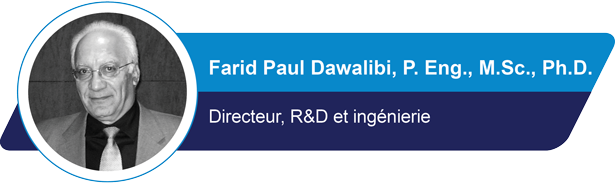
Le Dr Farid P. Dawalibi, directeur de la R&D et de l'ingénierie, a cofondé SES en 1978. Un expert de renommée internationale en mise à la terre et en interférences électromagnétiques, il est l'auteur de plus de 450 rapports techniques et de recherche et a présenté plus de 150 cours abrégés et séminaires techniques.
En 2012, le Dr Dawalibi a créé le programme de certification de SES Software et est actuellement l'instructeur principal de toutes les activités de formation de SES ; il contribue au développement continu du programme éducatif en plus de superviser les instructeurs responsables des cours et des ateliers.
En plus de ses activités de formation en cours et de ses travaux de recherche novateurs, le Dr Dawalibi a été le chef de projet de l'équipe qui a développé les progiciels GATL, ECCAPP (EPRI EL2699 et EL5472) et AUTOGRID (CEA 249 D 541). Il a été témoin expert lors de plusieurs procès exigeants et est un conseiller technique et un consultant pour plusieurs entreprises importantes d'électricité, de pipelines et de chemins de fer. Il a apporté d'importantes contributions à la norme 80 de l'ANSI/IEEE, dont il a également rédigé certaines parties.
Le Dr Dawalibi détient un doctorat en génie électrique de Polytechnique Montréal, un institut d'ingénierie affilié à l'Université de Montréal.
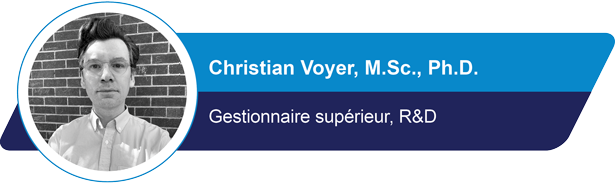
Christian Voyer, Ph. D., est un gestionnaire supérieur en R&D qui participe à de nombreuses activités de SES depuis qu'il s'y est joint en 2010, dont des projets de recherche analytique, l'évaluation de rapports techniques de tierces parties, le soutien technique à la clientèle, le développement de logiciels et l'étude de problèmes de mise à la terre, de sécurité et de compatibilité électromagnétique. Grâce à sa vaste expérience, sa compétence théorique et son engagement indéfectible envers l'enseignement de qualité, il est un membre important de l'équipe d'instructeurs de SES, dont il fait partie depuis 2013, et est le gestionnaire du programme de certification de niveau 1 de SES.
Christian détient un doctorat en physique expérimentale de l'Université McGill, qu'il a obtenu en 2011.
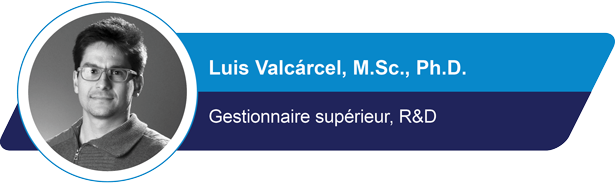
Luis Valcárcel, Ph. D., est un gestionnaire supérieur en R&D qui s'est joint à SES en 2009 et qui participe de façon continue au développement de logiciels, à la rédaction de rapports de recherche analytique, à des projets importants de clients et au soutien à la clientèle. Il possède beaucoup d'expérience pratique en étude de la mise à la terre et des interférences électromagnétiques, y compris de l'expérience sur le terrain en matière de mesure de la résistivité du sol et des tensions de contact et de pas. Membre de l'équipe d'instructeurs de SES depuis 2013, il enseigne à tous les niveaux de certification et participe également à la formation interne pour veiller à ce que le personnel technique de SES se conforme à des exigences élevées en matière de rendement.
Luis détient un doctorat en physique expérimentale de l'Université McGill, qu'il a obtenu en 2008.
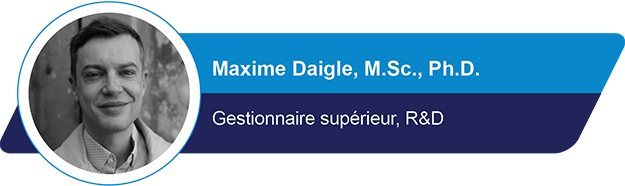
Maxime Daigle, Ph. D., est un gestionnaire supérieur en R&D qui travaille chez SES depuis 2014. En plus de présenter des formations, il participe régulièrement à des activités de recherche et de soutien à la clientèle qui permettent d'apporter des améliorations importantes à de nombreuses applications de SES. Il a également participé à de nombreux projets impliquant des études sur la mise à la terre et les interférences électromagnétiques. Grâce à une combinaison solide de connaissances théoriques et d'expérience pratique, il est un membre clé de l'équipe d'instructeurs de SES depuis 2015.
Maxime détient un doctorat en génie électrique de Polytechnique Montréal, qu'il a obtenu en 2011.
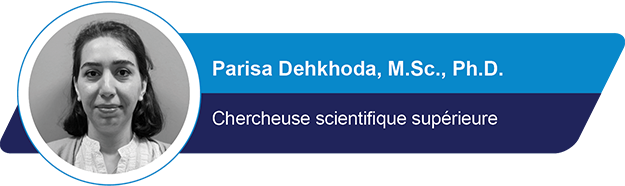
Parisa Dehkhoda, Ph. D., est une chercheuse supérieure en R&D qui travaille chez SES depuis 2021, où elle est impliquée dans la recherche et le développement de logiciels, ainsi que dans le soutient technique aux clients de SES. Parisa fait partie de l'équipe d'instructeurs de SES depuis 2023, apportant avec elle une vaste expérience en enseignement de plus de 10 ans au niveau universitaire. Ses recherches portent principalement sur les méthodes numériques en électromagnétisme, notamment en ce qui concerne la compatibilité électromagnétique. Elle est l'auteure ou la coauteure de plus de 50 articles scientifiques et documents de conférence.
Parisa détient un doctorat en génie électrique de l'Université de technologie Amirkabir à Téhéran.
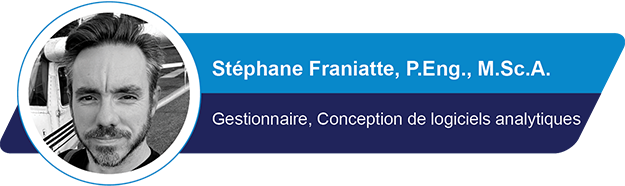
Stéphane Franiatte détient un baccalauréat (2013) en génie électrique et une maîtrise (2017) en génie logiciel de l'École de Technologie Supérieure à Montréal, Canada. Il s'est spécialisé dans l'optimisation mathématique et dans l'algorithmique. De 2003 à 2008, il a servit comme officier dans un sous-marin nucléaire, où il était responsable des systèmes de propulsion électrique ainsi que de la discrétion acoustique du vaisseau par des analyses des fréquences des vibrations.
Il fait partie de SES depuis 2014. Ses travaux de recherche portent sur les mathématiques appliquées, particulièrement sur le traitement numérique du signal, l'analyse des phénomènes transitoires, l'électromagnétisme numérique et l'informatique.
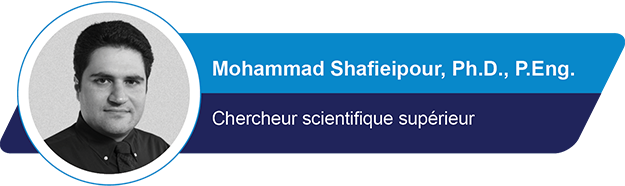
Mohammad Shafieipour est titulaire d'une maîtrise et d'un doctorat en génie électrique et en génie informatique de l'Université Multimédia de Malaisie (2010) et de l'Université de Manitoba (2016). Après avoir obtenu son doctorat, il a travaillé plusieurs années a titre de d'ingénieur en recherche et développement en simulation à Manitoba Hydro International.
Le Dr. Shafieipour s'est joint à SES en 2020 et il fournit actuellement du soutien technique pour la suite logicielle CDEGS, tout en contribuant au développement du progiciel.
Il fait partie de l'équipe d'instructeurs de SES depuis 2022, apportant non seulement sa vaste connaissance de l'électromagnétique computationnelle et de l'analyse de phénomènes transitoires électromagnétiques (thèmes abordés dans plus de 40 articles scientifiques rédigés par le Dr. Shafieipour), mais également une grande expérience dans plusieurs outils de simulation de systèmes d'alimentation électrique.
Alexandre Juneau Fecteau, PhD, est chercheur scientifique chez SES depuis 2022. Il participe activement à la recherche et au développement, au soutien technique ainsi qu'à la formation, et a contribué à l'amélioration de plusieurs applications de SES.
Alexandre détient un baccalauréat et une maîtrise en physique, ainsi qu'un doctorat en génie mécanique de l'Université de Sherbrooke (2020). Au cours de ses études supérieures, il a mené des recherches sur les supraconducteurs et les ondes électromagnétiques, combinant travaux expérimentaux et modélisation numérique.
Certification
Si vous réussissez l'examen facultatif de certification de niveau 1, vous pourrez suivre l'examen de certification de niveau 2 dès que vous aurez complété un cours de certification de niveau 2 ; si vous le réussissez, vous pourrez atteindre le niveau de certification le plus élevé, le niveau 3 (expert).
De plus, votre nom sera affiché sur la page
Liste des utilisateurs certifiés
du site Internet de SES (sauf si vous ou votre entreprise demandez qu'il ne le soit pas).